

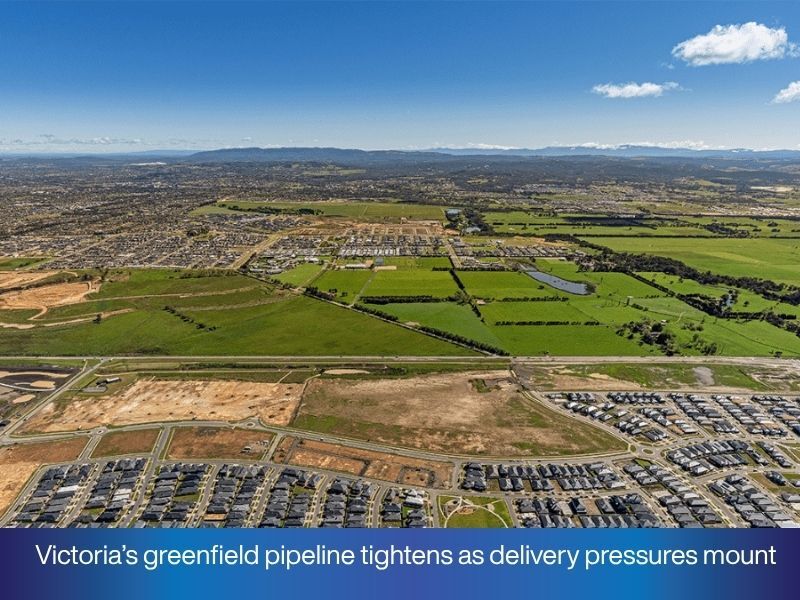
Colliers’ latest Victorian Greenfields Outlook report shows that while land sales and buyer confidence have improved, rising development costs, planning delays and affordability constraints are placing growing pressure on the state’s housing pipeline.
We spoke to the Colliers team about the cost pressures, planning bottlenecks and supply constraints impacting Victoria’s greenfield housing market.
Costs rise as affordability caps price growth
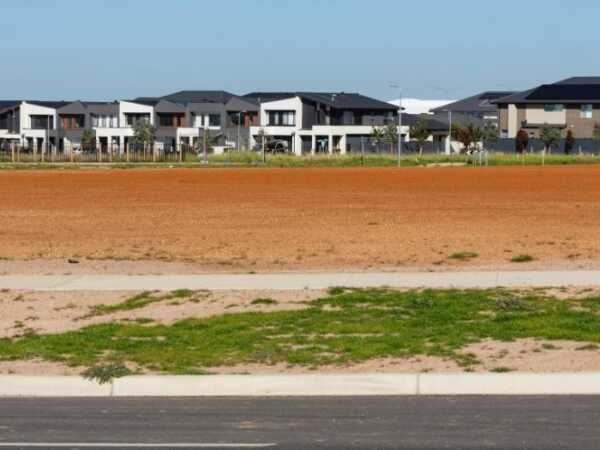
Victoria has been Australia's first-home buyer capital for more than a decade, supported by the relative affordability of its greenfield communities.
That affordability, however, is now limiting developers.
Median lot prices have held broadly stable at around $415,800, while development costs across construction, infrastructure and statutory contributions continue to climb.
Director, Strategic Development, Victoria, Nick Brisbane, said weak consumer sentiment was affecting Victoria's greenfield market more than other states.
“This has subdued price growth in the established housing market, which ultimately acts as a key comparison for house and land packages in Melbourne’s growth areas, where affordability is a key driver for demand,” Mr Brisbane said.
Supply tightens as sales recover
Land sales have continued to improve, with around 1,900 lots transacting in early 2026 - up nine per cent year-on-year - while monthly sales rates have also strengthened.
But supply is tightening.
Available stock has fallen to just 2,959 lots, with titled supply declining year-on-year as competition for ready-to-build land intensifies.
“At the moment, buyers are able to negotiate on price, make use of rebates and incentives offered by the developer,” said Research Manager, Land and Residential, Hoang Vo-Tran.
“We expect underlying rebates and incentives to diminish with land pricing for most in-demand lots to rise, and time on market to shorten.”
Planning delays slow new housing delivery
While costs continue to rise, planning is also a growing constraint.
Colliers State Planning Lead, Tim Peggie, said post-COVID changes to Victoria's Precinct Structure Plan process had failed to deliver the promised streamlined planning pathway.
“Timelines for PSP approval commonly exceed five years, and some, such as Beveridge North-West, have taken over a decade to approve,” he said.
Mr Peggie said a dedicated approval pathway modelled on the Development Facilitation Program could help speed up outcomes.
“Utilising a similar program that is dedicated to coordinating accelerated PSP timeframes within government and has the capacity to streamline government decision making will serve to deliver timely and reliable PSP outcomes,” he said.
Market outlook remains positive
Despite the headwinds, the Colliers team expects greenfield development to remain central to Victoria’s future housing supply.
Mr Brisbane said ongoing uncertainty around the Middle East conflict, inflation, interest rates and property tax settings would continue to weigh on confidence over the next 12 to 24 months.
“Melbourne’s established housing market is now trading at more than a 40 per cent discount compared to Sydney, and this will drive demand for affordable product in Melbourne’s greenfield,” Mr Brisbane said.
“Ultimately, we expect at some stage a price correction in the broader housing market, which will be a positive outcome for Melbourne’s greenfield markets.”